PCB Laser Depaneling Machine for High-Volume OEMs: How to Cut Scrap Rate
PCBSEP builds high-precision PCB Laser Depaneling Machines for high-volume OEMs. Eliminate mechanical stress, reduce scrap rates, and automate your SMT line with our Inline & Offline Singulation systems. Get a quote today.
If you are managing a high-volume SMT line today, you know the nightmare of the hidden 1%. You run thousands of panels a day, but at the very end of the line—during singulation—micro-cracks form in your ceramic capacitors (MLCCs), or a mechanical router bit dulls slightly, tearing a flexible circuit trace.
That 1% scrap rate isn’t just waste; it’s a profitability leak.
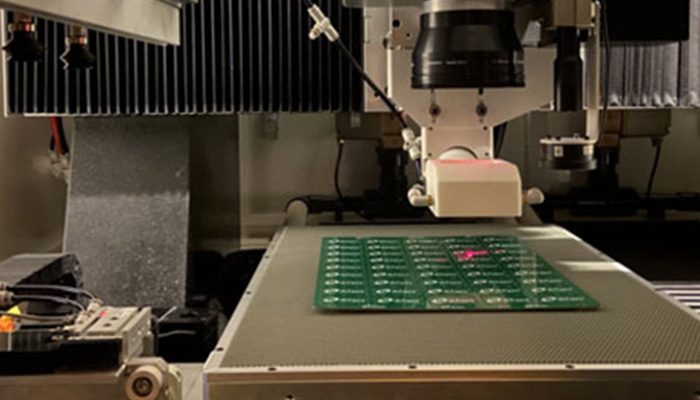
At PCBSEP, we have spent years helping OEMs transition from mechanical routing to non-contact laser singulation. The answer to cutting scrap isn’t just being more careful—it’s changing the physics of how you cut. By switching to a Máquina de despainelização a laser para PCB, you eliminate the mechanical stress that kills yield, ensuring that the board you produce is as perfect as the design intended.
This guide explores why mechanical methods fail in mass production and how our laser solutions, like the ZAM series, turn depaneling from a bottleneck into a competitive advantage.
A Hidden Failure in Mass Production: The Limits of Mechanical Depaneling
In the past, mechanical routers and V-cut PCB depaneling were the industry standard. They were cheap and good enough. But as components shrink (0201, 01005 packages) and boards become thinner (FPC/Rigid-Flex), mechanical force becomes a liability.
1. The Micro-Crack Phenomenon
Routing uses a spinning bit. It puts side pressure on the PCB. Vibration travels through the board. That is risky for caps. Ceramic capacitors are brittle. Keep them away from the cut line. Stress causes micro-cracks. They usually pass the first test. But they fail later. Thermal cycling breaks them down. The cost is huge. Field failures are expensive. It costs 100 times more than scrapping it here.
2. The Cleanliness Trap (IPC Compliance)
Mechanical cutting creates dust. Conductive fiberglass and copper dust can bridge fine-pitch components, leading to short circuits.
According to IPC-5704 (Cleanliness Requirements for Unpopulated Boards), maintaining ionic cleanliness is critical.Mechanical routers require aggressive vacuuming and often a post-wash cycle, adding time and cost to your process.
3. Consumable Chaos
In a high-volume factory running 24/7, router bits wear out fast.
Downtime: You must stop the machine to change bits.
Variance: The cut quality at “Bit Minute 1” is different from “Bit Minute 60.”
Cost: A factory running 5 lines can spend $50,000+ annually just on router bits.
Data Comparison: Mechanical Router vs. Laser Depaneling
Feature
Mechanical Router
PCB Laser Depaneling
Benefit of Laser
Mechanical Stress
High (Vibration/Torque)
Zero (Non-contact)
Protects sensitive MEMS/Sensors
Cutting Kerf (Width)
~1.0mm – 2.0mm
< 20µm – 50µm
Saves material, higher density
Consumables
Bits (Frequent changes)
None (Laser Source >20k hrs)
No downtime for tool changes
Edge Quality
Rough, potential burrs
Smooth, Carbon-free
No post-processing required
Scrap Rate
0.5% – 3% (Avg)
< 0.05%
Massive yield improvement
How Laser Technology Solves the Scrap Problem
The solution lies in cold ablation. Unlike mechanical tearing or hot CO2 burning, modern UV lasers work by breaking molecular bonds.
Precision Without Contact
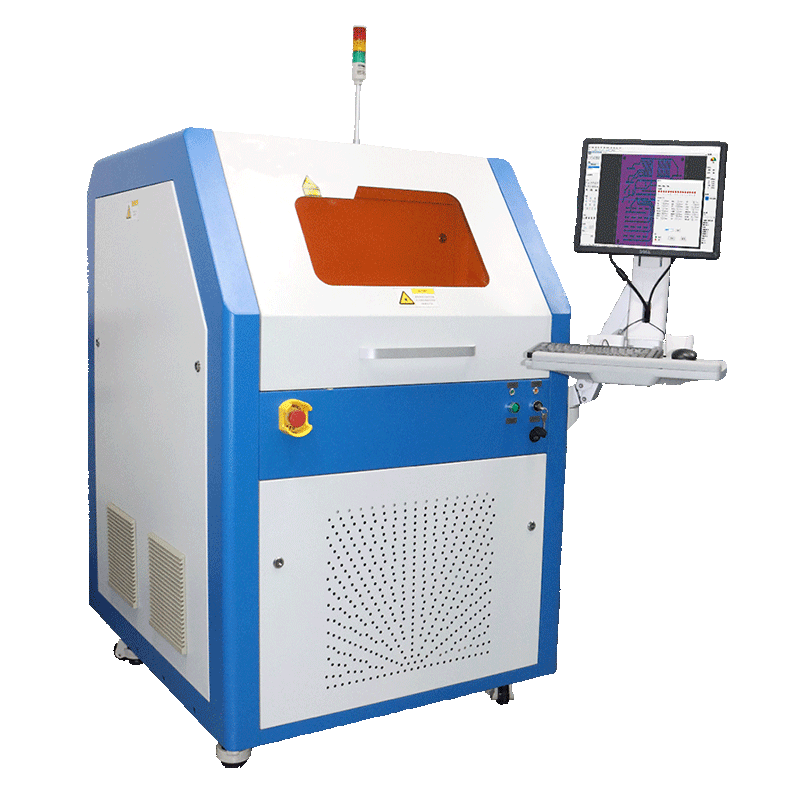
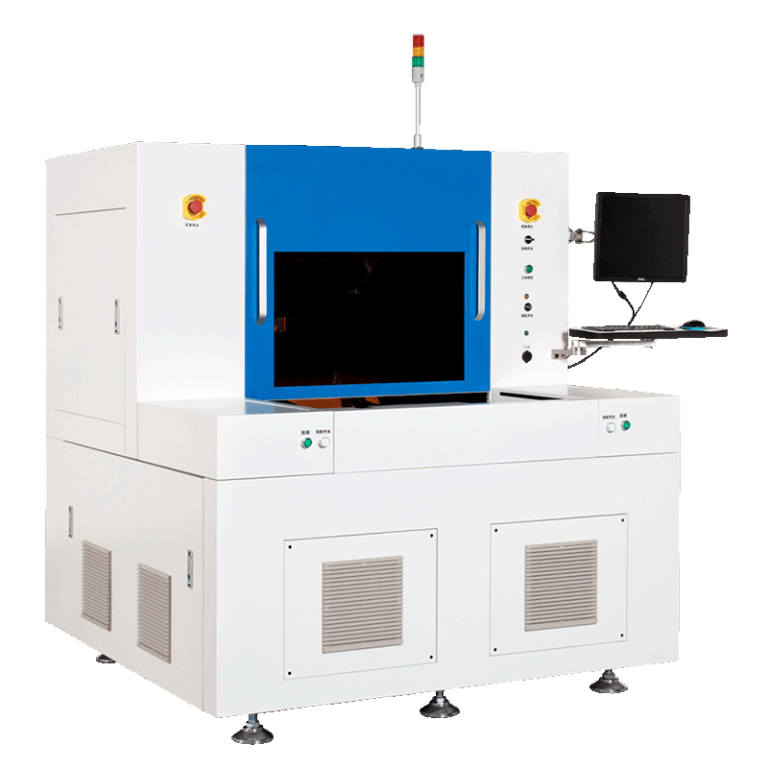
Our systems, such as the UV laser cutter (Model: ZAM310H), use a 355nm UV laser source.
How it works: The UV photon energy is higher than the binding energy of the PCB material (FR4, Polyimide). The material effectively “evaporates” without significant heat transfer.
The Result: A Heat Affected Zone (HAZ) of less than 20µm. This means you can place components right up to the edge of the board without fear of heat damage or stress fractures.
Best Practice: The “Multi-Pass” Strategy
Experience Note: Many engineers worry about carbonization (black edges).
The secret to a golden, clean edge is low energy, high repetition. Instead of trying to cut through a 1.6mm FR4 board in one slow, hot pass, our software executes 10-15 extremely fast passes. This allows the material to cool between passes, ensuring a clean cut that meets IPC-A-610 standards for edge quality.
From Batch to Inline: Automating for Volume
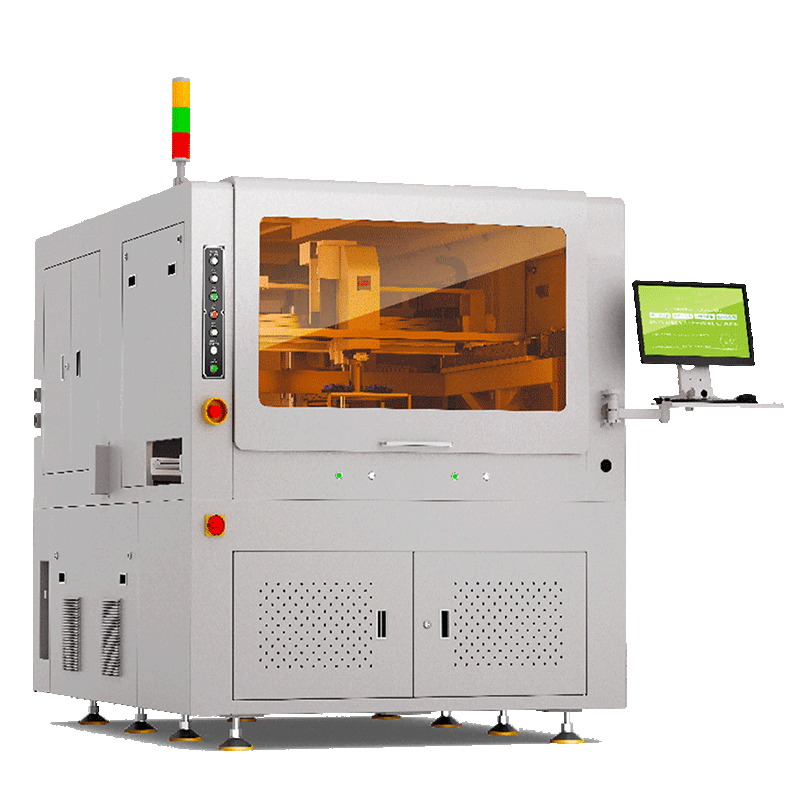
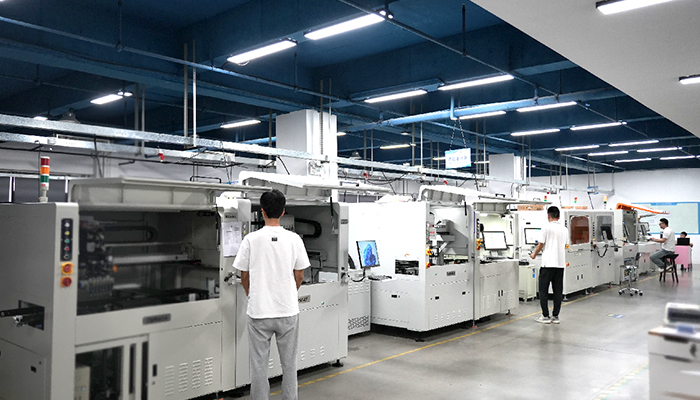
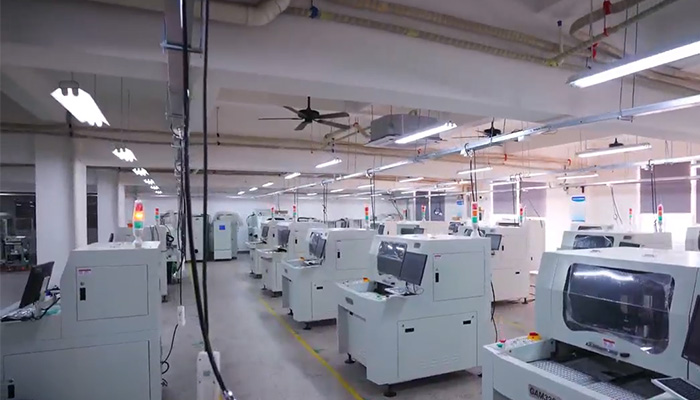
For High-Volume OEMs, “islands of automation” are no longer enough. You need a seamless flow from SMT Reflow to Packaging. This is where Inline Laser Depaneling changes the game.
The Inline Advantage
Moving from offline batch processing to an inline system eliminates manual handling—which is the #2 cause of PCB damage (dropping, static discharge).
Throughput: With dual platforms, one table is cutting while the other is loading/unloading. This effectively masks the loading time, doubling your throughput.
Integration: These systems come with SMEMA interfaces to connect directly to your loader/unloader or testing equipment.
Traceability: Integrated with your MES (Manufacturing Execution System), the laser can read a QR code on the panel, pull the correct cutting recipe automatically, and log the cutting data for every single board.
Best Practice: Handling FPC Flatness
Experience Note: Flexible Printed Circuits (FPC) are notoriously difficult to automate because they curl.
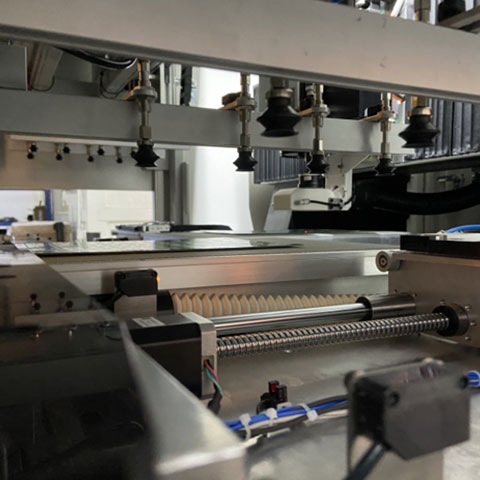
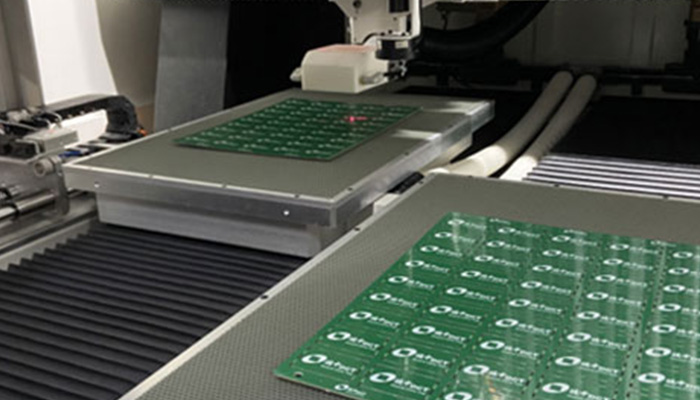
The Fix: For our inline systems like the automatic PCB laser depaneling (ZAM300AT), we utilize specialized vacuum adsorption tables. The vacuum pulls the flexible board perfectly flat against the honeycomb mesh. This ensures the laser focal distance remains constant across the entire panel, guaranteeing a uniform cut width.
Handling Complex Materials: One Machine, Any Substrate
One of the biggest ROI drivers for our clients is versatility. A mechanical router bit designed for FR4 will snap if you try to cut Aluminum IMS or Ceramic.
Laser systems are material-agnostic. By simply changing the software parameters (Power, Speed, Frequency), a single PCBSEP machine can process:
Rigid-Flex PCBs: The most challenging board type. The laser creates a stress-free transition between the rigid FR4 and the flexible Polyimide layer.
Ceramics (LTCC/HTCC): Used in RF and automotive applications. Laser is the only way to cut these without micro-cracking.
Large Formats: For automotive dashboard panels or LED strips, size matters. Our large-platform PCB/FPC laser depaneler (Model: ZAM310L) handles oversized panels that standard routers cannot fit.
ROI Analysis: Is the Investment Worth It?
A laser depaneling machine has a higher upfront cost than a router. However, for high-volume OEMs, the total cost of ownership (TCO) is significantly lower over 3 years.
1. Elimination of Consumables
Router: $20/bit × 5 bits/day × 300 days = $30,000/year per machine.
Laser: $0 consumables. The laser source lasts 20,000+ hours (approx 3-5 years) before refurbishment.
2. Yield Improvement
Scenario: You produce 500,000 boards/year at $20/board.
Router Scrap (1%): $100,000 lost/year.
Laser Scrap (0.05%): $5,000 lost/year.
Savings:$95,000/year just in yield improvement.
3. Fixture Savings
Mechanical routing requires expensive, custom hard-molds to support the PCB against the torque of the bit. Laser cutting is non-contact, so you can often use cheaper, universal fixtures or simple magnetic jigs.
Why Partner with PCBSEP?
We don’t just sell machines; we sell a process guarantee.
Application Lab: Send us your Gerber files and sample panels. We will perform a trial cut using machines like the ZAM310S to prove the cycle time and edge quality before you buy.
Global Service: We understand that in mass production, downtime is not an option. Our remote diagnostic capability allows us to troubleshoot software issues instantly, and our local partners support hardware maintenance.
Customization: Need a specific MES protocol? A custom loader size? As a manufacturer, we adapt the machine to your line, not the other way around.
Frequently Asked Questions (FAQ)
Q1: Will the laser burn my PCB edges?
No. We use UV Laser (Cold Ablation) technology. By optimizing the cutting parameters (high frequency, multi-pass), the temperature at the cut edge remains low, preventing carbonization. The edge will be clean and golden, not black.
Q2: Is laser cutting slower than a router?
It depends on thickness. For FPC and thin FR4 (<0.8mm), laser is significantly faster. For thicker boards (>1.6mm), the linear speed might be slower, but because the laser requires no tool changes, no cleaning steps, and lower maintenance, the overall daily throughput is often higher.
Q3: Is the machine safe for operators?
Absolutely. All PCBSEP machines, including the ZAM330D, are fully enclosed Class 1 Laser Safety systems. They feature safety interlocks, smoke extraction, and laser-safe viewing windows. No special protective gear is needed for the operator during normal use.
Q4: Can I cut copper traces with the laser?
Yes, but with some considerations. UV lasers can cut copper, but thicker copper layers require higher energy and slower speeds. For best results, we recommend adding mouse bites or clearance channels in the copper layers along the cutting path. This significantly improves cutting speed and edge quality.
Q5: How do you handle the smoke/fumes?
Effective fume extraction is non-negotiable. Our systems integrate with high-performance dust collectors (HEPA filters) that activate simultaneously with the laser. The airflow is designed to pull debris away from the lens and the PCBA to ensure cleanliness standards (IPC-5704) are met.
Ready to eliminate mechanical stress from your production line? Contact PCBSEP today to schedule a free sample cut and see the difference precision laser singulation makes.
Envie seus detalhes de CAD e painel; forneceremos amostras de corte, fotos, micrografias de bordas opcionais, parâmetros de laser recomendados e uma estimativa de tempo de ciclo/rendimento para que você possa decidir rapidamente.
Suporte de vídeo remoto
Sessões de vídeo ao vivo e criptografadas para configuração, ajuste de receitas, alinhamento visual e manutenção básica. Agendamento rápido, listas de verificação claras e notas de acompanhamento para manter sua linha funcionando.
Comissionamento e treinamento no local
Engenheiros certificados cuidam da instalação, calibração e treinamento de operadores, entregando POPs e resultados de aceitação de acordo com o seu padrão de qualidade. Disponível em todas as nossas regiões de atendimento.