How Inline Laser Depaneling Improves Throughput Without Adding Labor
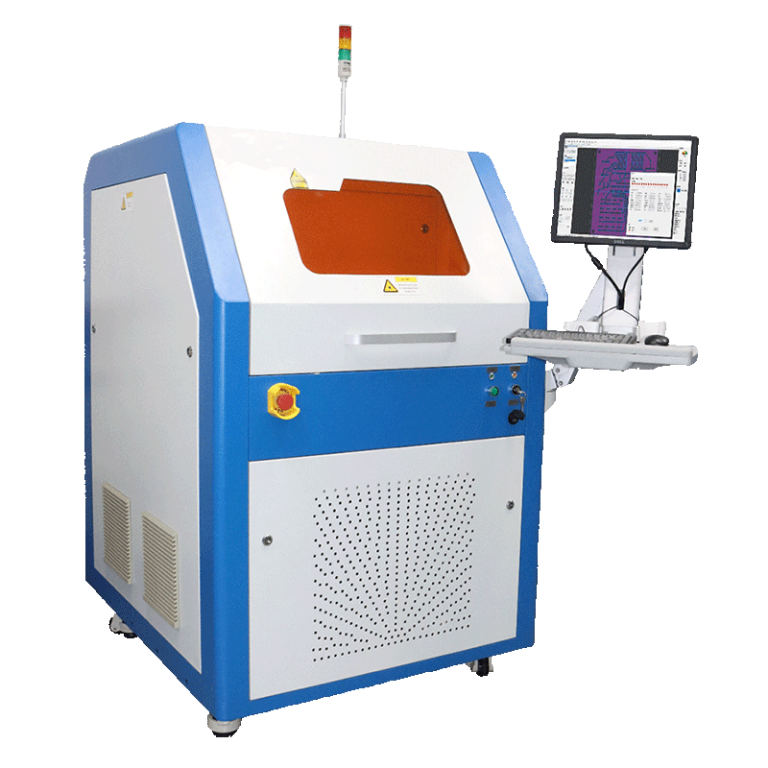
A great machine helps you break terrible old habits. You can finally stop dumping baked boards onto a messy manual table. It hooks right up to your moving belts and it reads barcodes all by itself.
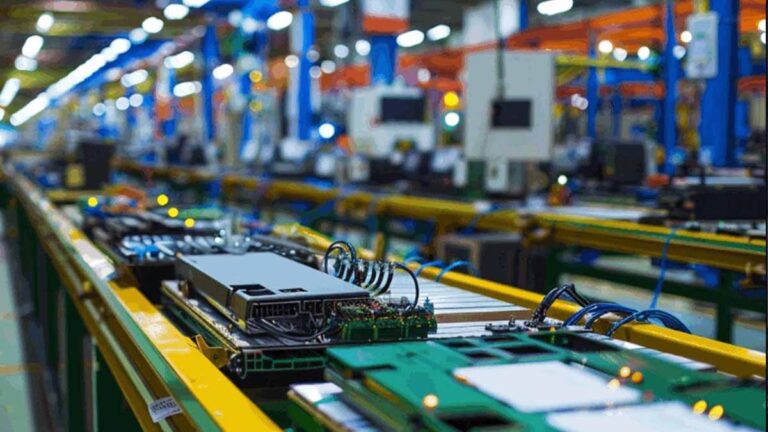
Inline laser depaneling improves throughput without adding labor by removing the non-cutting delays that usually hide around PCB separation. In a large SMT factory, the bottleneck is often not the laser cycle itself. It is the waiting, carrying, fixture loading, program checking, and downstream sorting that happen around a manual or semi-manual depaneling station.
A well-planned inline pcb laser cutting process keeps panels moving in a controlled flow. It reduces manual touches, shortens transfer time, protects sensitive assemblies, and gives production managers a more stable output model without simply adding another operator to the line.
Why More Labor Is a Weak Throughput Strategy
Adding labor can help for a short period, but it rarely fixes the structure of the bottleneck. If the process still requires operators to unload panels, identify the correct fixture, separate boards, inspect edges, and reload output, the line remains limited by human-paced work. During peak demand, this creates overtime. During labor shortages, it creates missed output.
Large manufacturers usually want a more durable answer. They need throughput that is repeatable by shift, by line, and by site. Inline laser depaneling supports that goal because it turns the separation step into a controlled part of the production flow instead of a labor buffer.
Throughput Constraint
Labor-Based Response
Inline Laser Response
Panels queue after reflow
Assign another operator
Keep panels moving through conveyor transfer
Fixture loading slows changeover
Train faster handling
Reduce physical tooling and use recipes
Wrong program risk
Add checklist steps
Use barcode and recipe verification
Manual sorting delays output
Add downstream handling labor
Integrate unloading or controlled transfer
Shift-to-shift variation
Rely on experienced staff
Standardize machine-controlled process
Throughput Comes From Removing Friction
Throughput gains often come from removing small frictions. A few minutes lost during every changeover, a few seconds lost on each manual transfer, and a few rejected boards per shift can create a measurable capacity loss. Inline automation attacks these frictions directly.
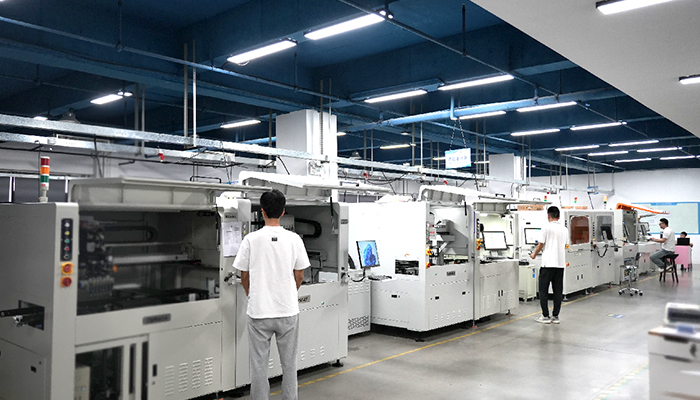
The machine can receive the panel, align the cut, execute the recipe, and release the product without sending the board through a separate manual island. When the line is designed correctly, operators supervise the process instead of physically driving every step.
The best throughput improvement is the one that makes the line less dependent on constant human rescue.
Where Laser Depaneling Protects Yield While Increasing Output
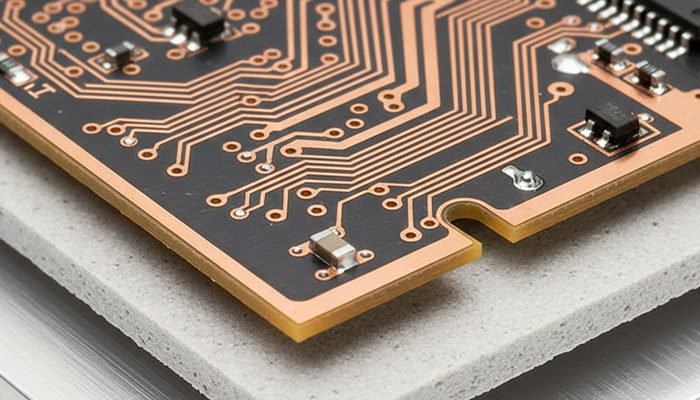
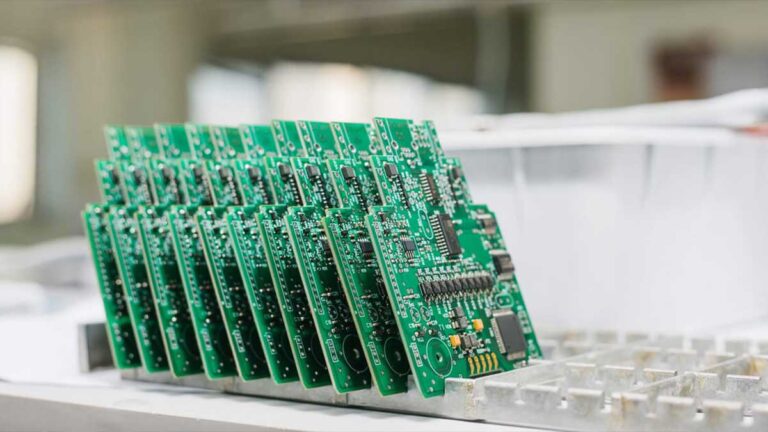
Throughput without yield protection is not real improvement. If a factory runs faster but creates cracked components, burnt edges, or damaged assemblies, the gain disappears in rework and customer risk. Laser depaneling helps because it can separate boards with low mechanical stress and high path accuracy.
This is important for products with dense components, edge-mounted connectors, LEDs, sensors, thin substrates, or mixed materials. For fr-4 laser cutting, fpc laser cutting, и ims laser depaneling, the process should be tuned by material and validated under production conditions. A professional pcb laser depaneling machine should support that recipe discipline.
A Better Way to Measure Capacity
Large manufacturers should measure capacity at line level, not only at cutter speed. The right question is how many good units the line can deliver per hour with stable labor, stable quality, and stable traceability. That includes loading, alignment, cutting, unloading, inspection, changeover, maintenance, and data handling.
Line-Level Metric
Why It Matters
What Inline Depaneling Should Improve
Good units per hour
Measures real output, not theoretical speed
Reduces waiting and manual handling
Manual touches per panel
Shows labor exposure and handling risk
Moves the process into controlled automation
Changeover time
Affects high-mix capacity
Uses stored recipes and faster validation
Rework from separation
Protects yield and customer quality
Reduces mechanical stress and handling damage
Traceability completeness
Supports audits and root cause analysis
Connects depaneling records to batch data
Implementation Path for Existing SMT Lines
For existing lines, the first step is not buying the machine. The first step is mapping current flow. Engineers should record where panels wait, how many operators touch them, how fixtures are selected, how programs are confirmed, and where traceability breaks. This creates the baseline for improvement.
Next, the team should test representative boards. Include the product with the tightest component keep-out, the most difficult material, and the highest changeover frequency. If the system only works on the easiest board, it will not solve the real throughput problem.
Map manual movement after reflow
Measure current waiting time and WIP
Test difficult boards, not only clean samples
Confirm conveyor and MES integration requirements
Validate edge quality and cycle time before layout approval
When the ROI Becomes Clear
ROI becomes clear when the plant calculates more than direct labor. The full value includes less WIP, fewer fixtures, fewer handling defects, faster changeovers, lower rework, more stable staffing, and better audit evidence. These savings are especially strong in factories running multiple shifts or high-mix programs.
The investment also supports growth. Once the process is validated, the same production logic can be repeated across additional lines or plants. That is a major advantage for large manufacturers that need standardization, not one-off local fixes.
Final Recommendation
Inline laser depaneling improves throughput without adding labor when it removes manual friction from the production flow. The best system should protect quality while increasing output: low-stress cutting, stable alignment, recipe control, automation interface, and traceability all matter. For large manufacturers, this is a capacity strategy and a quality strategy at the same time.
Отправьте свои данные САПР и панели; мы предоставим образцы вырезов, фотографии, дополнительные микроснимки кромок, рекомендуемые параметры лазера и оценку времени цикла/выход продукции, чтобы вы могли быстро принять решение.
Удаленная поддержка видео
Прямые зашифрованные видеосессии для настройки, настройки рецептов, согласования технологического процесса и базового обслуживания. Быстрое планирование, понятные контрольные списки и последующие заметки для поддержания бесперебойной работы вашей линии.
Ввод в эксплуатацию и обучение на месте
Сертифицированные инженеры выполняют установку, калибровку и обучение операторов, предоставляя стандартные операционные процедуры и результаты приёмки в соответствии с вашими стандартами качества. Услуга доступна во всех регионах нашего обслуживания.