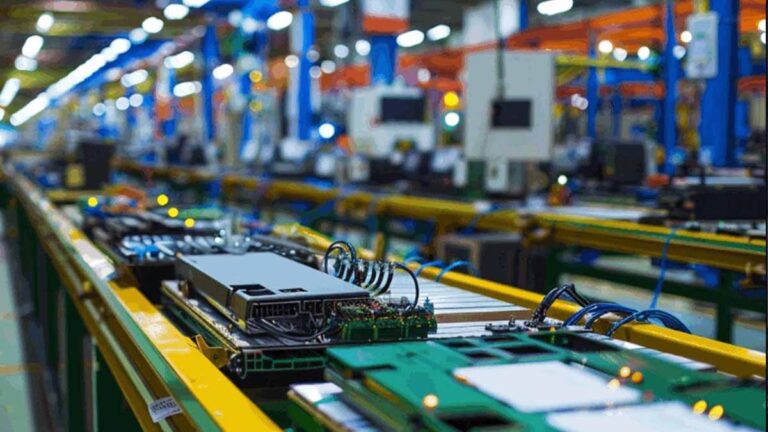
Operator dependency becomes expensive long before it appears on a labor-cost report. In a large PCB factory, one manual touch can slow a line, change cut quality between shifts, and make every quality investigation harder than it needs to be. Automated PCB laser depaneling solves this problem by moving the cutting process from operator skill to controlled recipe execution. For manufacturers running medical electronics, automotive control boards, power modules, industrial controls, or precision assemblies, that shift matters.
The practical answer is simple: if your depaneling result still depends on who is standing at the machine, the process is not stable enough for high-value production. An automated inline PCBA laser depaneler helps large manufacturers standardize cutting quality, reduce manual handling, protect sensitive components, and keep throughput predictable across shifts.
Why Operator Dependency Becomes a Factory-Level Risk
In a small workshop, a skilled operator can hide a weak process for a while. In a large manufacturing environment, that does not scale. The same operator cannot cover every line, every shift, every product family, and every urgent schedule change. Once production volume rises, manual depaneling creates variation in board support, cutting path, feed speed, fixture placement, inspection judgment, and handling discipline.
That variation often shows up in ways that are painful to trace. One shift may see higher edge defects. Another may see more cosmetic rework. A new operator may use too much force during loading. A busy line may accept slightly misaligned panels because the schedule is tight. None of these problems looks dramatic at first. Together, they create a process that quality teams cannot fully trust.
For a large manufacturer, the real goal is not only to reduce labor. The goal is to reduce judgment calls at the point where quality risk is created.
What Automated Laser Depaneling Actually Standardizes
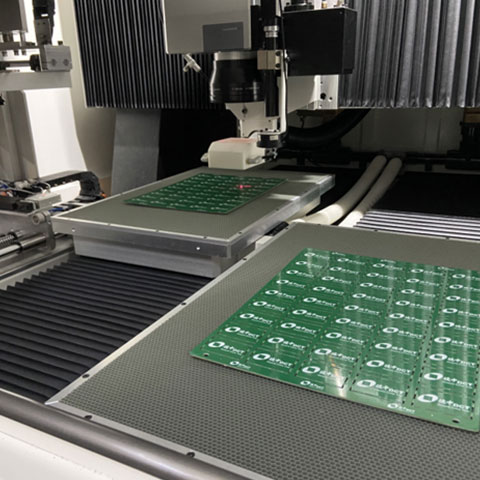
Automation is valuable only when it controls the right variables. A good PCB laser depaneling system should not simply move a panel from point A to point B. It should make the cutting process repeatable, traceable, and easier to audit. That is why many manufacturers review the full PCB laser depaneling machine product range before choosing between offline, semi-automatic, and inline configurations.
Process variable
Manual dependency
Automated laser control
Why large factories care
Cutting path
Operator follows tooling or manual alignment
Recipe-controlled laser path
Consistent geometry across batches
Panel handling
Risk of bending, twisting, or uneven support
Defined loading, clamping, and transfer
Lower stress on populated boards
Material response
Depends on operator setting knowledge
Material-specific laser parameters
Better control of heat affected zone and edge quality
Shift variation
High when training levels differ
Lower because recipes define the process
More stable output across 24/7 production
Traceability
Often recorded manually
Can integrate with barcode, MES, and machine logs
Faster root-cause analysis
This is the difference between buying a cutting machine and building a controlled manufacturing step. Large manufacturers usually care about the second one. They need stable process windows, predictable maintenance, safe operation, clear responsibility, and data that supports quality decisions.
The Quality Case: Less Handling, Less Stress, Fewer Hidden Defects
Mechanical depaneling methods can work well in the right environment. However, operator dependency rises when the board is thin, the components sit close to the edge, the routing path is complex, or the panel design changes often. Manual handling also becomes a larger risk when assemblies carry heavy components, fine-pitch devices, ceramic substrates, or flexible circuits.
Laser depaneling reduces that dependency because the cutting force does not come from a blade, router bit, die, or punch. The process uses a controlled laser beam and software-defined path. For many large factories, this is the main reason to evaluate a PCB FPC laser cutting machine as part of a broader quality upgrade.
What changes on the production floor?
Operators no longer need to compensate for fixture wear or board movement in the same way.
Cutting programs can be locked, approved, and reused.
Process engineers can adjust parameters based on material and design instead of relying on tribal knowledge.
Quality teams get a more repeatable process for audits and failure analysis.
Production managers can move operators to higher-value tasks instead of using them to protect a fragile depaneling step.
In our experience, the strongest business case appears when depaneling affects downstream reliability. A cracked solder joint, a lifted edge, or a stressed component may not fail at visual inspection. It may fail during thermal cycling, vibration testing, burn-in, or field use. Large customers notice that kind of risk immediately.
How Recipe Control Reduces Training Pressure
Training is important, but training should not be the only thing protecting quality. In a well-designed automated depaneling process, the operator loads the correct product flow, scans or selects the job, verifies the panel, and lets the machine execute the approved recipe. The operator still matters. They just do not need to make as many micro-decisions during every cycle.
This is especially useful in factories with high staff movement, multiple shifts, or fast product introductions. A new product can move from engineering approval to production with a documented cutting file, defined laser settings, and clear acceptance criteria. That gives process engineers more control and gives production supervisors fewer surprises.
Before automation
After automated laser depaneling
Senior operators hold much of the process knowledge
Approved recipes hold the process knowledge
Training focuses on manual technique
Training focuses on setup discipline, safety, and verification
Shift-to-shift variation is harder to isolate
Recipe, machine status, and logs make variation easier to investigate
Engineering changes require fixture or tooling review
Many changes can be handled through software path updates
Output depends heavily on operator speed
Output depends more on cycle design and line balance
Material Coverage Matters When Operator Skill Cannot Be the Backup Plan
Large manufacturers rarely build only one board type. One plant may run rigid FR-4 assemblies in the morning, flexible modules in the afternoon, and specialty substrates for a key customer at night. If the depaneling process depends on an operator knowing how each material behaves, the factory inherits a training and quality problem.
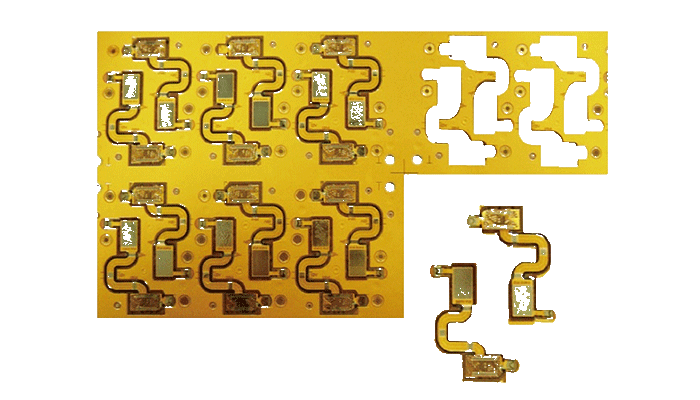
For flexible circuits, a controlled laser process helps reduce the risk of pulling, fraying, or edge deformation. That is why teams working on wearables, sensors, cameras, and compact modules often review flexible pcb depaneling cutting solutions early in the NPI stage instead of waiting for mass production trouble.
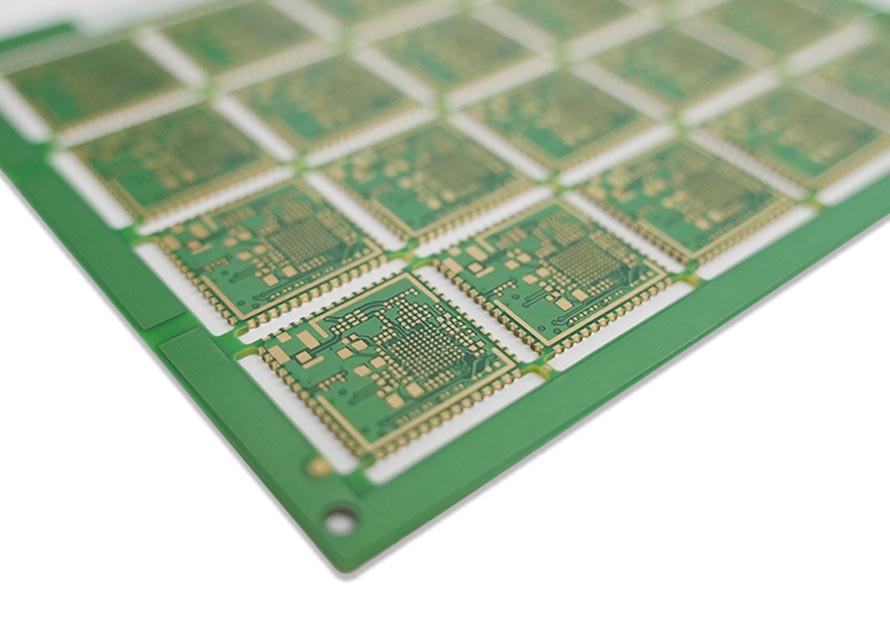
For rigid assemblies, the key concerns are usually board edge quality, component clearance, routing precision, and reliability after separation. A properly selected fr-4 laser cutting depaneling process can reduce mechanical load compared with routing or V-cut separation, especially when sensitive components sit close to the cutting path.
For power electronics and thermal management assemblies, the substrate may be tougher and less forgiving. In those cases, ims laser depaneling cutting gives engineering teams a way to evaluate precision cutting without building every decision around operator force, tool wear, or custom mechanical fixtures.
Where Automation Delivers the Fastest Operational Payback
The fastest payback does not always come from the line with the highest labor count. It often comes from the line where manual depaneling blocks throughput, creates inspection burden, or forces managers to reserve their best operators for a risky step. When that happens, the factory loses flexibility. Production planning starts to depend on people instead of process capability.
We usually see the clearest benefits in five situations:
High-value assemblies where one damaged panel costs more than hours of machine time.
Automotive or medical products where mechanical stress becomes a reliability concern.
High-mix production where fixture changes and operator learning curves slow the factory.
Fine-pitch or edge-sensitive designs where mechanical cutting leaves too little margin.
Plants with multiple shifts where quality must stay stable without depending on one senior operator.
In these environments, automated depaneling is not just a machine purchase. It becomes part of the manufacturing control plan. That framing helps engineering, quality, operations, and finance speak the same language during approval.
Implementation Plan for Large Manufacturers
A successful automation project starts before the equipment arrives. The factory should define what it wants to remove from operator judgment and what it wants the machine to control. That includes board support, panel positioning, cutting sequence, extraction, marking, barcode flow, maintenance checks, and pass/fail standards.
Step 1: Select the right pilot product
Choose a board that creates real pain. A perfect pilot is not the easiest board in the factory. It is a product where manual depaneling causes quality risk, throughput pressure, or training burden. If the pilot solves a visible problem, internal support becomes much easier.
Step 2: Define measurable acceptance criteria
Large manufacturers should avoid vague targets like better quality or faster production. Use measurable criteria: edge quality, cycle time, yield, part handling, operator touch points, thermal marks, particle control, recipe approval, and uptime. The more specific the acceptance criteria, the easier it is to compare manual and automated depaneling fairly.
Step 3: Connect the machine to the production system
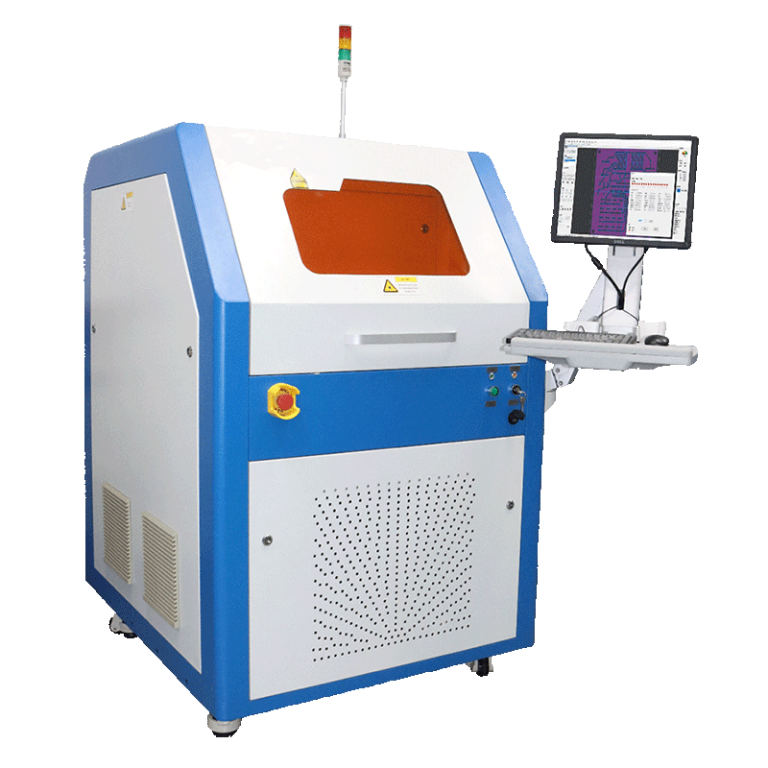
If the goal is lower operator dependency, do not leave the machine isolated. Use barcode selection, recipe control, and line communication wherever possible. For fully automated SMT flow, an inline laser depaneling cell can support SMEMA-style line integration and build a cleaner bridge between cutting, handling, and traceability.
Step 4: Train operators around control points, not hero skills
The new training model should focus on safe loading, recipe confirmation, abnormal-condition response, basic maintenance, and inspection standards. You still want skilled operators. You just do not want the line to depend on heroic manual technique to hit normal quality targets.
KPIs Management Should Track After Deployment
Operator dependency is easier to reduce when management tracks the right numbers. Labor hours alone do not tell the whole story. A depaneling project should also measure process stability, engineering response time, and how often production needs expert intervention.
KPI
What it reveals
Target direction
Operator touch points per panel
How much manual handling remains
Down
Changeover time
How fast production can switch products
Down
Edge defect rate
Whether cutting quality is stable
Down
Recipe deviation events
Whether process control is being followed
Down
Unplanned expert support
How often senior staff must intervene
Down
Line output stability
Whether the process supports predictable planning
Up
These metrics help the project team defend the investment after installation. They also keep the focus on the real objective: a more repeatable, less people-dependent manufacturing process.
Common Mistakes to Avoid
Buying only for speed. Cycle time matters, but quality control and line stability usually matter more for large manufacturers.
Testing only simple boards. A pilot should include real production difficulty, not only a clean demo sample.
Ignoring extraction and safety. Laser cutting needs proper fume extraction, enclosure design, and operator protection.
Leaving recipe approval informal. If anyone can change parameters without review, automation loses part of its value.
Separating equipment decisions from NPI. Depaneling constraints should enter design review early, especially for high-density and edge-sensitive boards.
Final Recommendation
If your factory depends on a few experienced operators to keep depaneling stable, the process is carrying hidden risk. Automated PCB laser depaneling gives large manufacturers a cleaner path: less manual handling, tighter recipe control, more consistent quality, and better traceability. The best projects start with a real pain point, define measurable acceptance criteria, and connect the machine to the wider production system.
For factories that build high-reliability electronics, this is not only about cutting boards. It is about removing fragile human-dependent steps from a process that needs to run predictably every shift, every product change, and every production ramp.
How does automated PCB laser depaneling reduce operator dependency?
It moves the main cutting decisions into controlled recipes. Operators still load, verify, and monitor the process, but the laser path, cutting parameters, and sequence are managed by the machine instead of manual technique.
Is laser depaneling suitable for large SMT production lines?
Yes. Inline laser depaneling is often used when manufacturers need stable board separation, lower handling risk, and better integration with automated production flow.
Does automation remove the need for skilled operators?
No. It changes the skill requirement. Operators focus more on setup discipline, safety checks, recipe confirmation, and abnormal-condition response instead of manual cutting technique.
Which boards benefit most from automated laser depaneling?
High-value, high-reliability, thin, flexible, dense, or edge-sensitive PCB assemblies usually benefit most because manual handling and mechanical stress create more risk on these products.
What should a large manufacturer measure after installation?
Useful KPIs include operator touch points, changeover time, edge defect rate, recipe deviation events, expert intervention frequency, and line output stability.
Envíe su CAD y los detalles del panel; proporcionamos muestras de corte, fotografías, micrografías de bordes opcionales, parámetros láser recomendados y una estimación del tiempo de ciclo/rendimiento para que pueda decidir rápidamente.
Soporte de video remoto
Sesiones de video en vivo y encriptadas para configuración, ajuste de recetas, alineación de visión y mantenimiento básico. Programación rápida, listas de verificación claras y notas de seguimiento para mantener su línea en funcionamiento.
Puesta en marcha y capacitación en el sitio
Ingenieros certificados se encargan de la instalación, la calibración y la capacitación de los operadores, entregando los procedimientos operativos estándar (POE) y los resultados de aceptación según su estándar de calidad. Disponible en todas nuestras regiones de servicio.