Don't worry, contact Our boss immediately
Don't rush to close it, now, please talk to our boss directly. Usually reply within 1 hour.
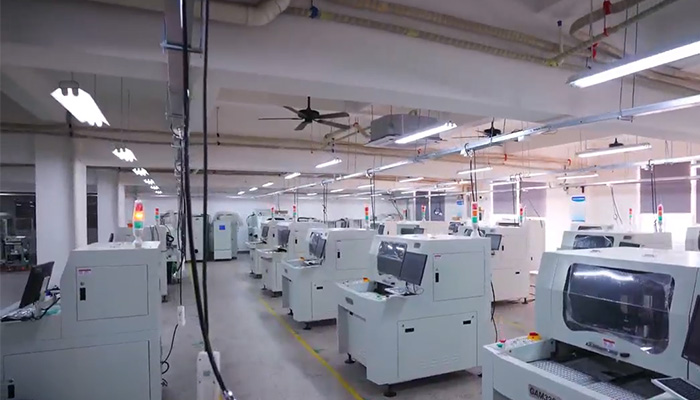
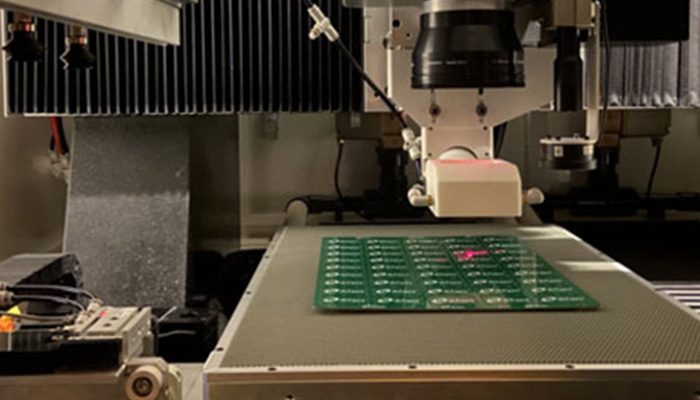
China's leading manufacturer of PCB Laser Dapaneling Machine
One-Stop PCB Depaneling Solutions
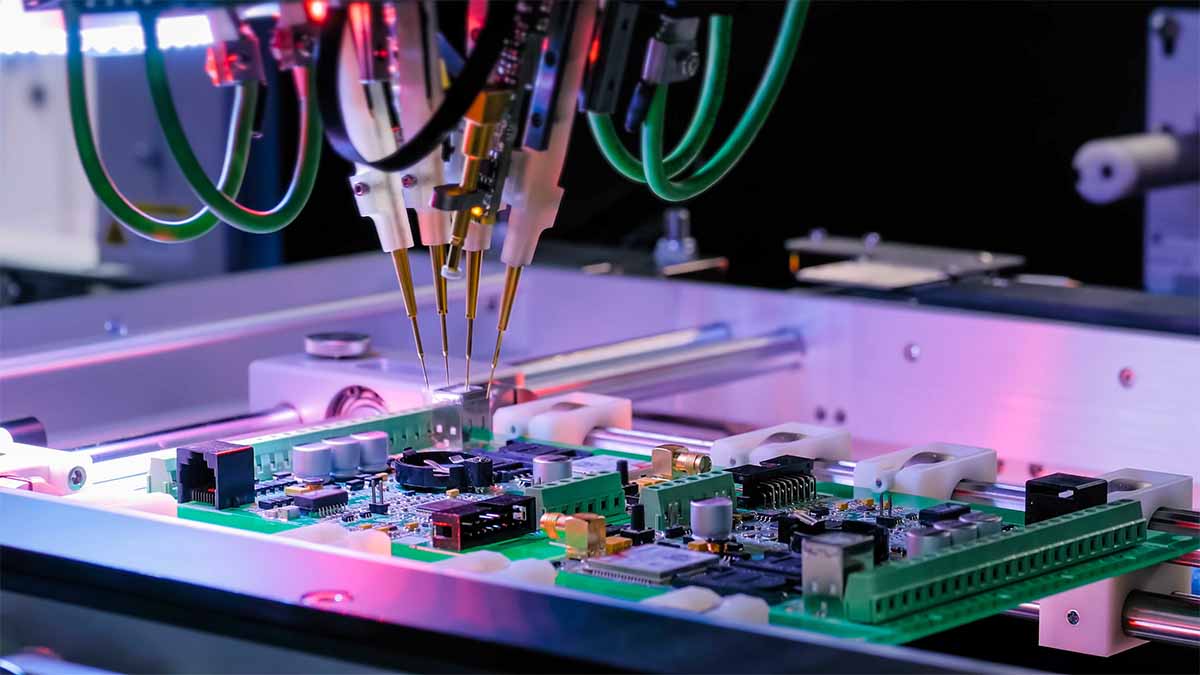
By standardizing your production lines with a pcb laser cutting machine, you instantly decouple your edge quality from the physical variables of PCB design. The benefits are massive and immediate.
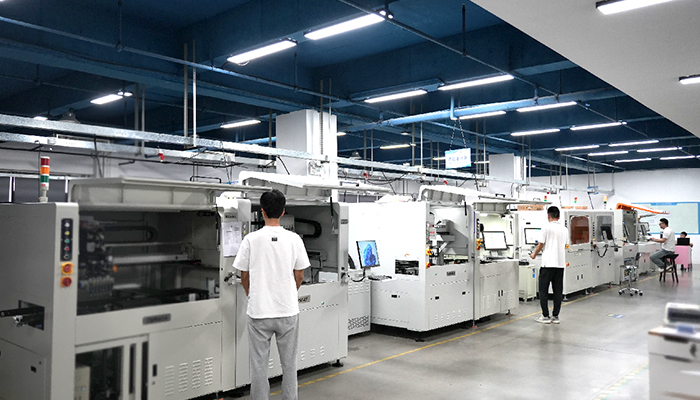
If you’re running an EMS floor, you know the HMLV struggle is real. You’re constantly bouncing between heavy-duty industrial FR-4, those super-dense automotive sensor arrays, and then jumping over to some really delicate medical rigid-flex. It’s a lot to balance.
Here is the direct answer to solving the quality variations caused by these constant design changes: you must completely eliminate physical mechanical tooling from your separation process. By standardizing your production lines with a pcb laser cutting machine, you instantly decouple your edge quality from the physical variables of PCB design. The benefits are massive and immediate. You achieve absolute zero mechanical stress on sensitive components, eliminate the need to fabricate custom routing fixtures for every new client, reduce line setup times from 45 minutes to under two minutes, and guarantee pristine, dust-free edges across every single substrate material you process.
As a team of process engineering solutions experts who spend our days walking the factory floors of global EMS providers, we see the same root cause for yield drops everywhere: the mechanical router. In an environment where PCB layouts and materials change daily, relying on a physical cutting tool is a massive liability. In this comprehensive, experience-based guide, we will break down exactly how different board designs cause quality variations, the physics behind laser technology, and how standardizing on a pcb laser depaneling machine is the ultimate equalizer for your factory’s quality control.
To understand why leading EMS factories are aggressively moving to laser technology, we first have to look at how modern PCB designs are breaking traditional mechanical depaneling methods.
In the race for miniaturization, PCB designers are packing components closer and closer to the board’s edge and breakaway tabs. This is a nightmare for EMS providers using mechanical routers or V-scoring machines. Mechanical cutting requires brute physical force to shear through the fiberglass and epoxy resin. This force transfers violent high-frequency vibrations and bending moments directly into the board.
The most vulnerable components to this bending force are Multi-Layer Ceramic Capacitors (MLCCs). According to engineering data from Vishay, a leading component manufacturer, MLCCs are highly susceptible to flexure damage. When a circuit board is deflected during the mechanical depaneling process, it forms an arc. The tensile forces generated on the bottom surface of the MLCC cause the brittle ceramic to fracture under the termination.
Furthermore, industry failure analysis reveals that mechanical stress during assembly and depaneling creates internal cracks that bypass the dielectric barriers. These fractures are often sub-10µm and completely invisible to standard X-ray inspection. They will pass your end-of-line electrical tests, only to fail in the field months later due to humidity ingress or thermal cycling.
The core issue in an EMS factory is that a mechanical router bit starts to dull from its very first cut. As it wears down, it requires more force to push through the FR-4 material, causing mechanical stress to spike unpredictably. If you are manufacturing high-reliability automotive or medical devices, this variation is a catastrophic risk.
An EMS provider does not have the luxury of running just one material. On Monday, you might process a standard 1.6mm FR-4 motherboard. On Tuesday, you are asked to depanel a paper-thin polyimide flexible printed circuit (FPC).
Mechanical routers simply cannot cleanly cut FPCs; the bits tend to grab and tear the flexible polyimide, causing severe fraying and pulled copper traces. If you switch to physical die-punching for the FPCs, you have to wait weeks and spend thousands of dollars to fabricate a custom metal die. Every time the OEM updates the board revision, that expensive die goes straight into the scrap bin.
When we upgrade an EMS client’s facility to a uv laser cutting system, the transformation in operational stability is profound. A laser system does not care if the PCB design changes; it treats every design with the exact same optical precision.
When QA managers first hear about laser cutting, their immediate concern is heat: “Won’t a laser burn the white solder mask or damage the copper traces?”
This is a valid concern if you are looking at outdated CO2 lasers (which operate in the far-infrared spectrum and cut by melting the material). However, modern high-end SMT lines utilize Ultraviolet (UV) nanosecond or picosecond lasers.
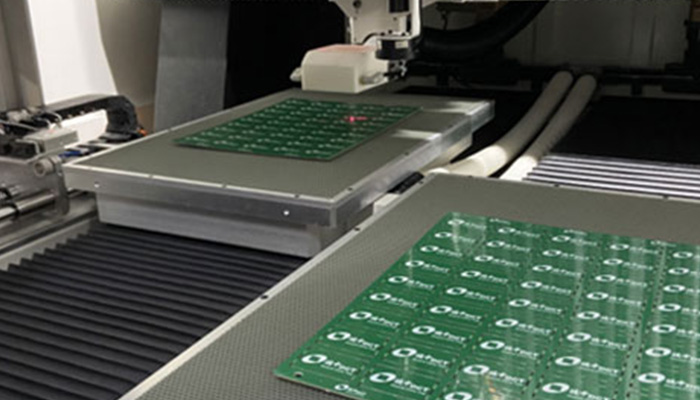
According to laser source experts at Coherent, modern DPSS (diode-pumped solid-state) UV lasers operating at a 355 nm wavelength utilize a process known as “photoablation” or “cold ablation.” Because the UV photons carry extremely high energy, they directly break the molecular and chemical bonds of the substrate material rather than heating it. The material is instantly vaporized into a microscopic gas before excessive thermal heat can soak into the surrounding board.
This “cold” process drastically minimizes the Heat-Affected Zone (HAZ), completely preventing carbonization, burring, and thermal stress. Furthermore, because the laser beam can be focused to a spot size of just 20µm, the kerf width is significantly reduced, allowing for incredibly tight corner radii and complex geometries.
💡 Best Practice 1: Conduct Material HAZ OptimizationWhile UV lasers are incredibly versatile, different substrates absorb UV light differently. When taking on a new EMS contract with a unique substrate (like a white-solder-mask Teflon RF board or a thick ceramic), we recommend running a small qualification batch first. By fine-tuning the laser’s pulse frequency, scanning speed, and power, your process engineers can dial in the perfect recipe to achieve a completely carbon-free edge. Save this recipe in the machine’s digital library so operators can recall it instantly for future runs without any guesswork.
Beyond mechanical stress, EMS providers face intense scrutiny over bare board cleanliness. The IPC-5704 standard (“Cleanliness Requirements for Unpopulated Printed Boards”) establishes strict limits for ionic contamination, utilizing ion chromatography testing to detect harmful inorganic ions.
Why does this matter for depaneling? Mechanical routing generates an abrasive storm of fiberglass dust and copper swarf. In modern high-density assemblies with incredibly tight trace spacing, this conductive dust settles between fine-pitch component legs. As noted by PCB fabrication experts, inorganic ionic contamination trapped under components or solder mask leads to electrochemical migration—specifically, the growth of dendritic structures between the anode and cathode that cause catastrophic electrical shorts.
Because the UV laser cold ablation process vaporizes the material instead of grinding it, there is no milling dust. The microscopic exhaust gases are instantly pulled away by an integrated HEPA filtration and fume extraction system. The result is a pristine, dust-free cut edge. By standardizing on a pcb depaneling system that uses laser technology, your factory effortlessly meets strict IPC-5704 cleanliness standards without requiring secondary, water-intensive board washing steps.
In contract manufacturing, the quality of the cut is often ruined by human error during the physical changeover and panel loading process. With CNC routing, you’re basically running a heavy-maintenance shop. Think about it: every new product needs its own dedicated jig. You’re looking at a full teardown—unbolting, installing, calibrating—every single time.
We’re talking 30 to 45 minutes of zero production. Plus, there’s no safety net. If the panel isn’t sitting perfectly flush, you’re going to hit a trace and kill the board. It’s a massive liability for your yield that you just don’t need.
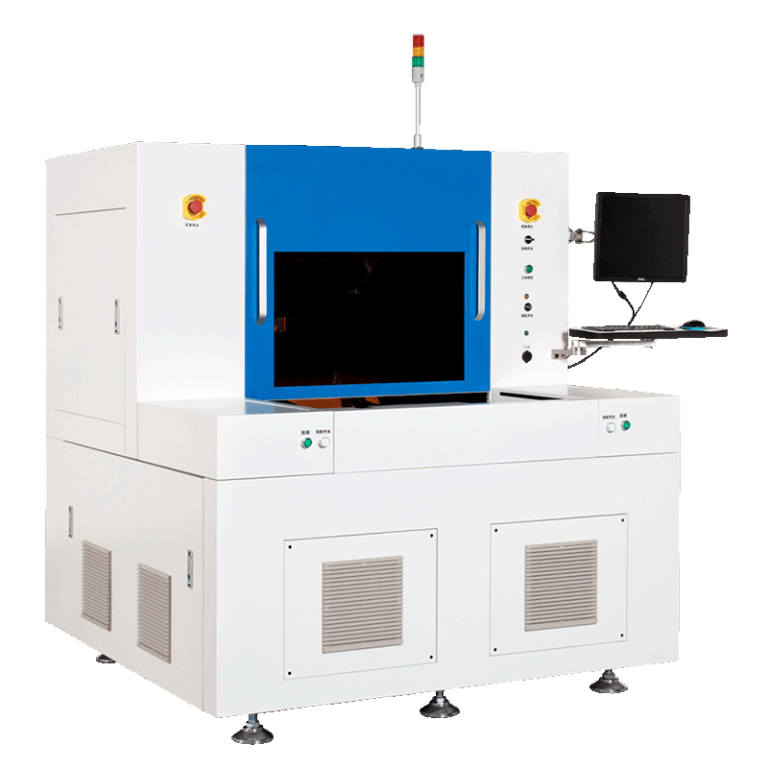
A laser system replaces physical hardware with digital software.
💡 Best Practice 2: Digitize Your Tooling with DXF IntegrationStop relying on physical aluminum layout templates. Train your CAM team to export the cutting path as a standard digital DXF file the moment a client sends their Gerber data. A modern laser system allows your operator to import this DXF, assign the cutting parameters, and launch production in under two minutes. By shifting to software-defined tooling, your setup time drops to virtually zero, significantly boosting your Overall Equipment Effectiveness (OEE).
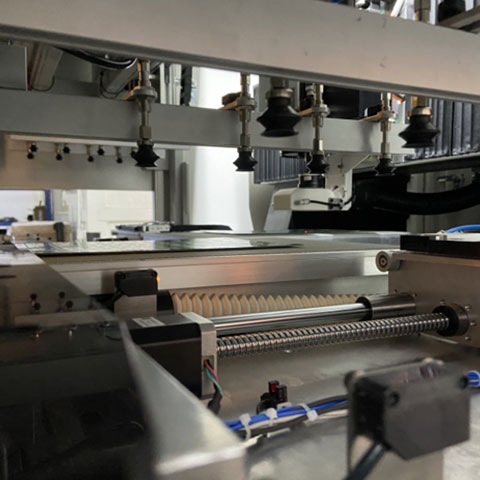
💡 Best Practice 3: You can completely cut out loading errors with a good vision system. The downward-looking camera checks every panel for fiducials before it starts. Even if a board is warped from the heat or sitting a little crooked, the system scales and rotates the cut on the fly. You’re not relying on the operator to be perfect every single time—the machine handles the precision for you. This guarantees ±20µm precision on every single cut, completely removing human alignment errors from your quality equation.
Let’s look at the hard operational data comparing traditional mechanical methods against optical laser technology in a high-mix contract manufacturing environment.
| Metric | Mechanical Router | Custom Die-Punch | UV Laser Depaneling |
| Mechanical Stress | 800 – 1000 µstrain (Varies widely with tool wear) | High impact shock | < 50 µstrain (Constant, non-contact) |
| Tool Wear & Consumables | High (Bits dull continuously from cut #1) | Medium (Die sharpening) | Zero (Non-contact light beam) |
| Changeover Setup Time | 30 to 45 Minutes (Physical jig swaps) | 60+ Minutes | < 2 Minutes (Digital DXF file load) |
| Material Capability | Rigid FR-4 (Tears FPC, struggles with Ceramic) | FPC only (High cost) | Rigid, FPC, Rigid-Flex, LCP, Ceramics |
| Cut Width (Kerf) | 2.0 mm – 3.0 mm | N/A | 20 µm – 50 µm |
| Edge Cleanliness | Leaves fiberglass dust, fails IPC-5704 without wash | Leaves fibers | Pristine, dust-free, carbonization-free |
As you can see, the core advantage of a pcb singulation system is absolute consistency. Because there is no physical tool to degrade, the 10,000th panel you cut on a Friday night will have the exact same edge quality, dimensional accuracy, and stress profile as the very first panel you cut on a Monday morning.
For EMS factories handling a massive variety of PCB designs, the debate between mechanical routers and laser systems is effectively over. The ongoing risk of latent MLCC field failures, the hidden costs of scrapped panels due to mechanical drift, and the massive OEE downtime caused by physical line changeovers make mechanical cutting a severe liability.
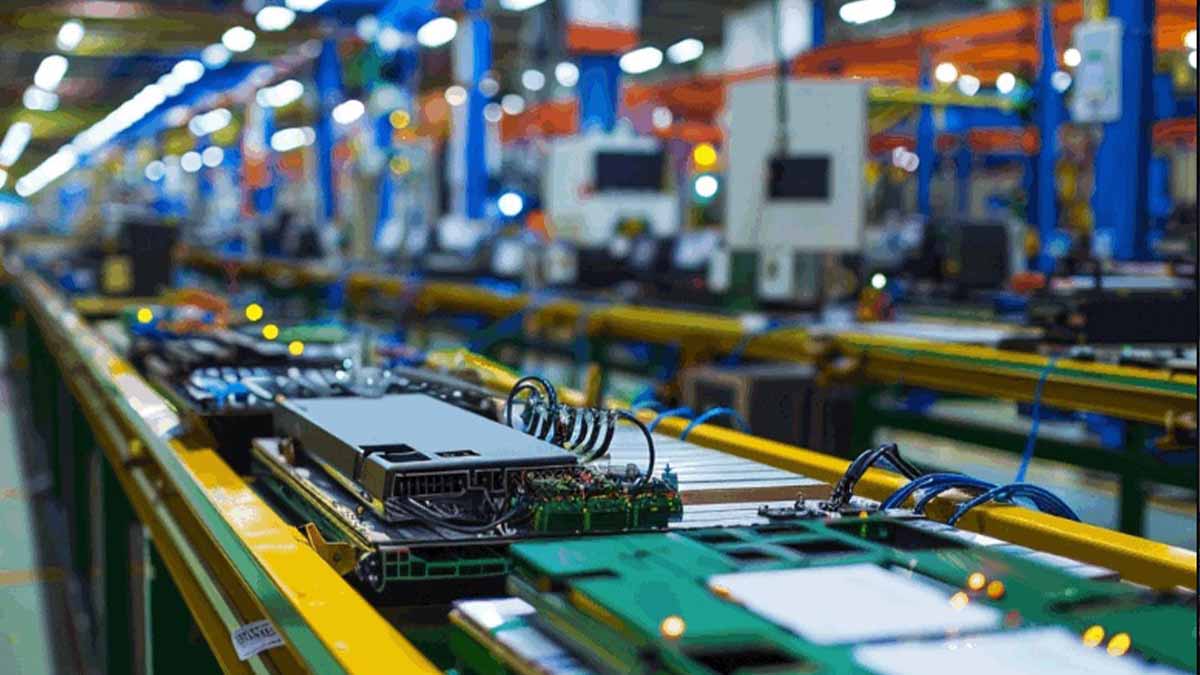
Standardizing your factory with a flexible, high-precision laser depaneling machine is not just a marginal process improvement; it is a strategic investment in absolute manufacturing certainty. It allows you to confidently say “yes” to any complex, high-density OEM contract, knowing your separation process will deliver zero mechanical stress, zero dust, and perfect quality every single time.
A: It’s actually all software-driven, which makes it incredibly flexible. For thin FPC, the laser can usually zip through in a single pass. But when you’re dealing with thicker 1.6mm or 2.0mm FR-4, the system just switches to a multi-pass strategy. It’s essentially a ‘cool-cutting’ process—it shaves the material down layer-by-layer so fast that heat never has a chance to soak in, regardless of the board’s profile.
A: Actually, that’s exactly why people go with laser for high-density boards. Since the beam is only about 20 microns wide and there’s zero mechanical vibration, you can get right up against sensitive parts like MLCCs or glass diodes. We’re talking a 0.1mm clearance without any risk of micro-cracking or heat damage. It’s about as safe as it gets.
A: Look, when you vaporize material, you’re going to get some microscopic exhaust—there’s no way around the physics. But these units are fully self-contained. They’re Class 1 laser safe and come hooked up to high-end, multi-stage HEPA and carbon filtration. It scrubs the air right at the source, so your operators won’t deal with any smell or smoke. It’s totally cleanroom-ready.
A: That’s the real kicker for high-mix shops. You don’t have to swap out a single mechanical tool. With just a quick software tweak to the frequency and scan speed, you can jump from a 1.6mm rigid motherboard to a paper-thin polyimide flex circuit on the fly. It’s pure digital flexibility, which is a massive time-saver for your changeovers.
A: While the initial capital expenditure is higher than a standard mechanical router, the ROI in a high-mix EMS environment is incredibly fast (typically 12 to 18 months). This is achieved by completely eliminating the ongoing cost of consumable router bits, eradicating the expense of custom aluminum routing jigs for every new product, reducing 45-minute setup times to 2 minutes, and completely eliminating scrap caused by mechanical flex cracking.